
Maximizing Efficiency: Incorporating AI into Employee Training Programs
- yusufaligheewala
- Dec 11, 2024
- 2 min read
Updated: May 15, 2025
Employee training is a cornerstone of organisational success, but traditional training methods often struggle to keep up with rapidly evolving business needs. Enter Artificial Intelligence (AI) — a transformative tool that’s revolutionising how businesses train and upskill their workforce.
In this blog, we’ll explore how AI can maximise efficiency in employee training programmes, supported by real-world examples and data insights.
The Role of AI in Modern Training Programs
AI brings personalised learning, data-driven insights, and interactive methods to training programmes, allowing organisations to deliver tailored experiences at scale. Key benefits include:
Personalisation: AI identifies individual learning needs and tailors content accordingly.
Engagement: interactive features like chatbots, gamification, and simulations improve learning retention.
Scalability: Training large teams simultaneously and saving time and resources has become easier with the help of AI.

Real-Life Applications of AI in Employee Training
1. IBM: AI-Powered Learning Platform
In 2018, IBM launched Watson Talent, an AI-driven platform that personalises training paths based on employee skill levels, goals, and interests. This initiative resulted in a 32% increase in learning retention rates, showcasing the power of tailored education.
2. Walmart: Virtual Reality Training (2017)
In 2017, Walmart adopted AI-enabled Virtual Reality (VR) to simulate high-pressure scenarios, such as Black Friday sales. This hands-on approach boosted employee confidence by 70%, equipping them to handle real-world challenges effectively.
3. Unilever: AI in Recruitment and Upskilling
Unilever began using AI in 2019 to analyse employee performance and recommend targeted training modules. This strategy streamlined upskilling efforts, leading to a 20% reduction in training costs while improving talent development outcomes.

Data-Driven Insights: Why AI Matters
Key Statistics:
According to PwC, 72% of business leaders consider AI critical for future employee training strategies.
AI-driven learning solutions reduce training costs by an average of 30-50% (Deloitte).
Organisations using AI in training saw a 37% improvement in employee satisfaction (LinkedIn Learning Report).
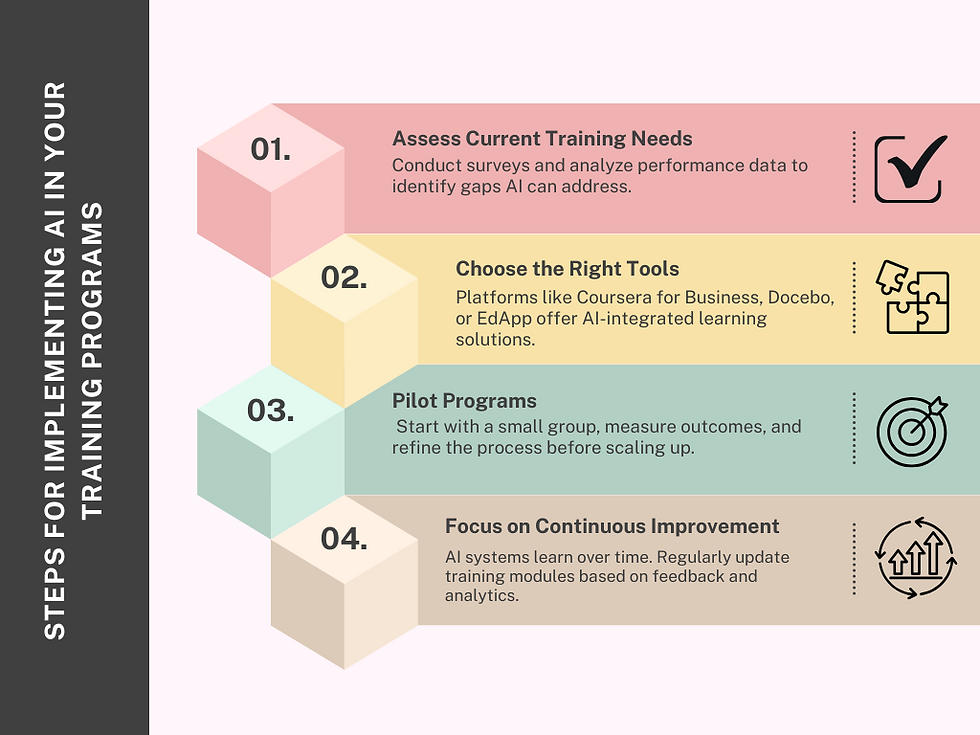
Implementing AI in Your Training Programs
Assess Current Training Needs: Conduct surveys and analyse performance data to identify gaps AI can address.
Choose the Right Tools:- Platforms like Coursera, Docebo, or EdApp offer AI-integrated learning solutions.
Pilots: - Start with a small group, measure outcomes, and refine the process before scaling up.
Focus on Continuous Improvement: AI systems learn over time. Regularly update training modules based on feedback and analytics.
The Future of AI in Employee Training
As technology advances, AI will offer even more sophisticated tools like adaptive simulations, voice-driven AI tutors, and augmented reality (AR) environments. Companies that embrace these innovations will maximise efficiency and will also empower their workforce to thrive in an ever-changing world.


Comments